
A Daredevil Primer
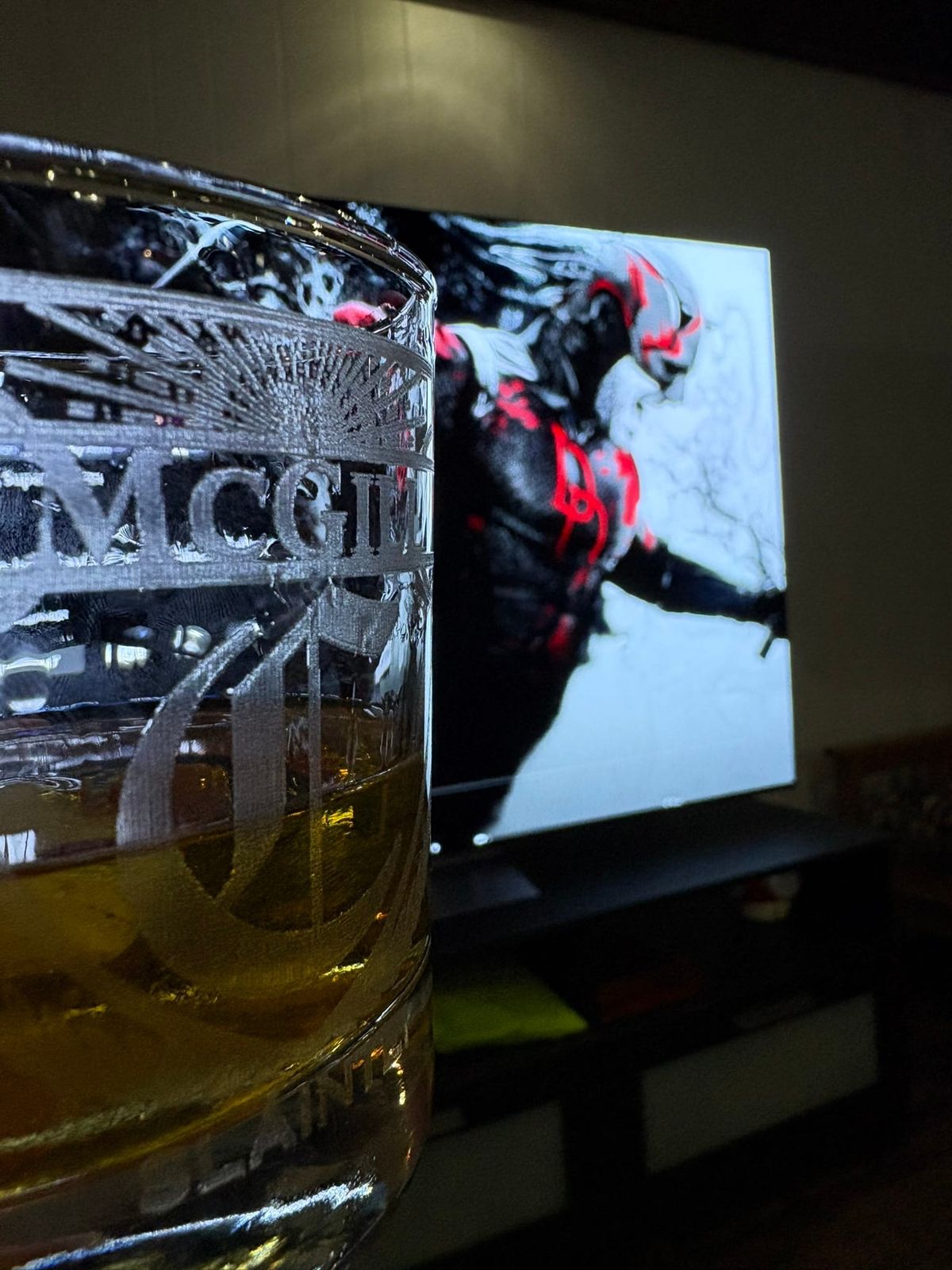
In preparation for my upcoming Daredevil Omnibus (named so because of Daredevil’s comic book origins) I want to give a primer on the character and my relationship to it in general. If only to stave off any questions I inevitably get when I so much as mention the Man Without Fear. I’ve no idea when that project will be done and many things may be released between this and that, but this is still the starting point for the eventual Omnibus. Familiarise yourself with this for many of these concepts will be mentioned, but not explained, in my future writings.
Do I love or do I hate Daredevil? Yes.
There is a large part of me that loves to see a fellow blind person beat the shit out of people and then do flips to run away from the cops. With blindness comes a powerlessness that seeps into every ass crack of our lives as the human world has been constructed with vision in mind, but Daredevil isn’t affected by that constructed exclusion. He is a surrogate for blind folks.Matthew Murdock, as Daredevil, can navigate both the blind world and the sighted world with ease and give blind folks a taste of what it might be like to comfortably exist in the constructed world. For a moment it feels nice to vicariously live that lie. But it is, ultimately, a lie. Our powerlessness is not solved by pretending we can replicate the power of seeing and that’s where I stare to cast harsh judgement upon Daredevil.
I would love Daredevil even if he wasn’t blind as his character is just so cool. A conflicted Catholic lawyer man whore who roams around at night enacting the justice that his own preferred system fails to enact. He is a compelling character that Marvel slapped a disability on to increase representation. Which has been a trend in comic books for decades. Damn near any characteristic, disability or otherwise, is represented on some superhero somewhere to varying degrees of quality. A topic for another time.
Daredevil is an interesting character, and my favourite superhero, because his egos blend with a bit more care than other characters from the comic books. Costumed vigilantes frequently wrestle with the clash between their identities and those clashes make for great storytelling. One of the best Daredevil stories involves that exact scenario playing out to an intense degree and the motion picture media I’m writing about loves to display Matthew and Daredevil as being antagonistic towards the success of each other. I don’t fall for that though. I think Daredevil and Matthew are one of the few combos that have intense synergy. Catholic guilt? Dress up as a devil and sin. Irish diaspora survivor? Express the post-colonial rage on criminals. Lose a case against a criminal because of a corrupt justice system? The former traits give a beautiful way to ensure justice is still served. Daredevil is cool because he is just Matthew Murdock. There is no alter ego, not to my interpretation, but a continuation of Matthew. Which isn’t a new idea, I recognise that, but I do think it’s an under discussed one and it will show up in my critiques of the various Daredevil shows.
I also love that Daredevil was mainly trained by a guy named Stick, who is generally portrayed as a piece of shit and a foil to Matthew’s philosophy on justice. But his name is what fascinates me – “Stick.” Otherwise known as the word that people use instead of “cane.” Stick and cane are opposing sides to the modern disability discourse which states that we should use accurate language even if it makes some people uncomfortable. My great-grandfather preferred his canes to be called sticks because of the stigma surrounding the use of a cane (not to mention the Ugly Laws he had to live with). When someone calls my cane a stick or, even worse, says, “what’s the stick for?” I have nothing but a burning desire to see how far I can shove my cane up their ass until something too hard gets in the way. Stick being a foil to Daredevil, but ultimately being on the same side, is a (probably accidental) genius expression of the battle in disability linguistics. Handicapped v crippled. Blind v visually impaired. Disabled person v person with a disability. Cane v stick.
Where Daredevil draws ire for me though is how that character and his stories have butchered the public perception of blindness and disability as a whole. Disability does not unlock new abilities. My other senses are not better because I am blind. Daredevil’s senses are not better because he is blind. The radioactive goop that spilled on his eyes to make him blind gave him a magic boost to his other senses. People seem to forget that incredibly important aspect of the origin story. We’ll come back to this in a moment.
I also tire of how writers, artists, and film makers portray Daredevil’s senses as emulating vision. His “radar sense” is always portrayed as making an intensely detailed visual image for him to use. This could be because those artists want to have an easy way to portray a radar sense to readers and watchers, but I still think it’s lazy, inaccurate, and furthers the bias of the “visually-abled”. I also mourn the lack of mention of the other senses besides hearing. Occasionally, and I do mean occasionally, Daredevil will mention the use of senses beyond hearing, but never to the degree that I think it should. In my own life I am using touch and smell and taste just as much as I’m using my hearing, if not more.
Which brings me back to that moment I teased earlier. “Radar sense” is not a super power. Any orientation and mobility trainer (the folks who teach blind people how to be blind) worth their salt will teach you how to use “radar sense.” But they’ll also teach you how to smell your way down the street, feel your way through the grocery store, and taste your way through cleaning the kitchen. And the greatest injury Daredevil has given to us? The myth that you have to be blind to do it.
Our hearing is not better. Our sense of smell and touch and taste IS NOT BETTER. There is some neuroplasticity happening, yes, but the sense is not actually improved. Blind folks just learn to pay attention to the other senses more and the neuroplasticity behind the lose of vision essentially moves the cognitive load of those other senses into parts of the brain that would have been taken up by sight. Which is all a fancy way of saying if you have vision you can still learn how to “echolocate.”
But echolocating does not create a visual image like depicted in the Daredevil stories. It is a purely auditory process. Just like how touching someone’s face does not give me any clue about how they look (a myth that even I believed when I first learned I was going blind). There is no non-visual power that can replicate vision and I am sick of people assuming the opposite. I can’t definitively blame Daredevil for all of this, but I can place a considerable amount of the blame on his shoulders. Heaps of blind stereotypes come from Daredevil and people who have no idea who the character is are still influenced by those tropes.
I think a lot of my disappointment towards the character can be solved if we had more blind people involved in Daredevil’s writing. In my research, which could benefit from a bit more depth, there has only been one blind writer behind Daredevil, Elsa Sjunneson, and she was writing Daredevil within a Jessica Jones series. Charlie Cox (who I do love), is sighted and I can find no involvement of anyone blind in the creation of the shows.
I have to ask, where the fuck are the blind people in a story about a blind person?
I’ve written extensively about disability representation in media and I don’t want to stray too far away from Daredevil, but I do want to mention that a lot of my interactions with the Daredevil “fandom” include a lot of ableism. You’d think “fans” of Daredevil would be informed about blindness and sympathetic to the plight of representation, but few are. I have no real proof of this (beyond doxxing my semi-anonymous Reddit account) and I haven’t pulled any studies (nor do I know if any have been made), but anecdotally I can attest that the average Daredevil fan is typically very antagonistic towards blind people and blindness as a whole. And I do, in part, blame the writing of the character for that. It’s easy to other blindness if the blind character is only blind in theory.