
I Have Beef with the Foundation Fighting Blindness
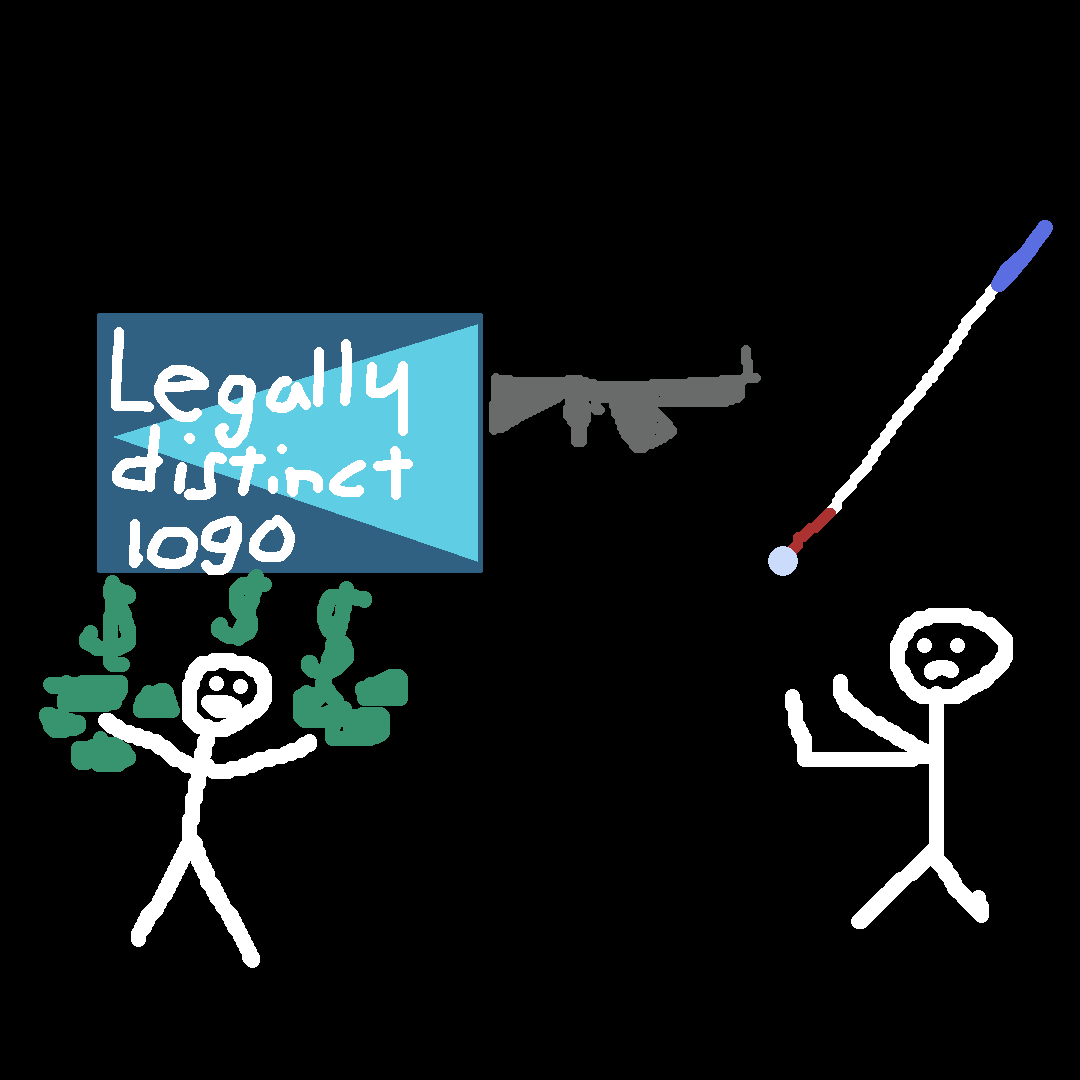
I am not so audacious as to consider myself a rhetorician, but my education consisted of an unhealthy amount of rhetoric and I can’t help but wear the hat. Leading me to draw ire with the Foundation Fighting Blindness. If the object of my derision is not immediately obvious then draw your attention to the verb in that name. They are fairly literal, and quite passionate about their fight against blindness, with their mission statement ensuring there is no room for misinterpretation. They are here to cure blindness first and foremost.
Let’s do some laundry before I give you the diatribe. Yes, the Foundation Fighting Blindness does more than just advocate for and fund cures for various blinding diseases and those services are incredibly helpful to the Blind community at large. They provide free genetic testing in the United States (if your doctor uses their program), they have heaps of information on scores of Blinding eye diseases, they put on regional fundraising events that attract the community beyond their own which creates a more diverse Blindness social landscape, and, their greatest contribution to the Blind community, they have a website that I would personally cite as not being very accessible to the Blind. I can not and will not deny the vital nature of those aspects of the organisation.
But, I urge us all to look back at that missions statement. Everything is done within the framework of eventually finding a cure. The Foundation Fighting Blindness uses their free genetic testing to propagate their aims in that “free genetic testing” nearly ensures that they are the first contact most people have with the wider Blind community and the mission is the first ideal set in the minds of the newly Blind – to fight blindness and find a cure. All things are secondary to that. The community that springs up around their events draws in a wider audience that they can potentially cure, meaning the community is not the point, the number of bodies are. More bodies, more genetic tests, more data, more dollars flowing into their coffers.
It is, naturally, everyone’s inherent right to have bodily autonomy and striving for a cure to blindness is well within the parameters of Blind people and organisations claiming to represent them, but the intense rhetoric surrounding it just bothers me. Blindness, like most disabilities, isn’t a fight. I am not at war with my blindness, I am at war, maybe, with ableism and politics and infrastructure, but never my blindness. The single-minded focus on a cure is reductive (again, to me) of the overall experience of being disabled and creates an environment where blindness as a concept is presented with a singular focus: tragedy. I was going to link a few of the more egregious advertisement that the Foundation publishes, but you can honestly just click on any of their videos to see what I mean. Blindness is described as a “half life,” as an “utter tragedy,” or as something that negates your quality as a parent, friend, spouse, human. That should not be the first exposure people have to blindness, both the Blind and pre-disabled folks.
I can’t help but think of money. Capitalism will do that to you. The Foundation makes a lot of money. Their financial reports total revenue from 30 June 2024 to 2025 at $41.5 million. There is money spent on research, a grand bulk of money in fact, but people are still getting paid. If blindness could be cured tomorrow would they shut the place down? If the fight is won, what happens? Non-profits, charities, places like Foundation Fight Blindness are still arms of capitalism and represent capitalistic interests. I also have to ask, when politicians can be paid so little to turn against the interests of their constituents what could the Foundation’s money do for Blind people? Disabled people in general? The recent stripping of disability rights from our shivering bodies could see progress overnight if the Foundation took even a sliver of their research grants and applied it to public policy.
Rosemarie Garland-Thompson, agreeing with several disability scholars before her, claims that disability is a social construct first and foremost and that the pathology of disability reduces our needs down to cures and treatments. But if cars weren’t a necessity for life in the United States, would a Blind person be as disabled as a Blind person living with a comprehensive public transit system? If subtitles and captions were widely used in cinemas and auditory media, would the Deaf person be as disabled as the Deaf person in a world where captions are afterthoughts? If disabled people had actionable, equal opportunities and rights provided by their governments to basic necessities of living, like involvement in their community, financial security, access to amenities, would the need for a cure become more of a want?
I read the word “hope” in a lot of their materials. “The Foundation gives people hope when they didn’t have any.” “The Foundation gives me hope that one day I will see my children again.” Real mushy shit that ignores the breadth of experience that humans are capable of having. The hope on offer isn’t the hope that all disabled people, or even all Blind people, get a meaningful guarantee at equality, but that each individual Blind person will see again. The free genetic testing on offer is really a honey pot as do these people really expect a cure to come cheap? Free? Readily accessible? Without the puppeteering strings of a culture that has already pathologized them rather than accept them as humans?
While the Foundation is set on presenting living with a disability as a half life, I think the real half life is living with the eternal hope that a cure is coming. The medical community has spent decades saying the cure to diabetes is just a few short years out. I’ve been hearing about the inevitable cure for retinitis pigmentosa for as long as I’ve been alive, and the results of a clinical study from fifteen years ago are the same as a clinical study that happened last year. If I remained rapt on the progress of a cure to my blindness I would be living a life of disappointment instead of utilising that energy to learn Braille, improve my cane skills, and further immerse myself in the incredible disabled community.
Not to be dramatic, but it feels like a form of cognitive eugenics, where disabled people are implied to not be whole people any more and can only be a true person when the cure is delivered. As terry Pratchett frequently says in Interesting Times, “There are worse things than whips.” Convincing Blind people that this entire experience is, first and foremost a fight, is worse than the actual fight we are engaged in. The fight for a cure is out of our hands, generally speaking, but the fight for a better life as we are is well within our grasp. There’s this lingering pernicious odour about the whole rhetorical affair. An implication that we’re not supposed to know that disabled people, the largest minority group in the world, the sole minority group that can issue invitations, have power.
Words, my internal rhetorician insists, are important. Fights and battles and wars are clear in their directives: there is an enemy and said enemy must be killed. What does the erasure, the wholesale slaughter of blindness look like? Do to our world? Can we truly be certain that the resulting victory for the Foundation would be one we want to live in?
I’d rather not see in a future dictated by the continued existence of blindness than see in a future where the values of the Foundation fighting Blindness define what disability is.